How to Outsource Cabinet Vision Without Disrupting Production
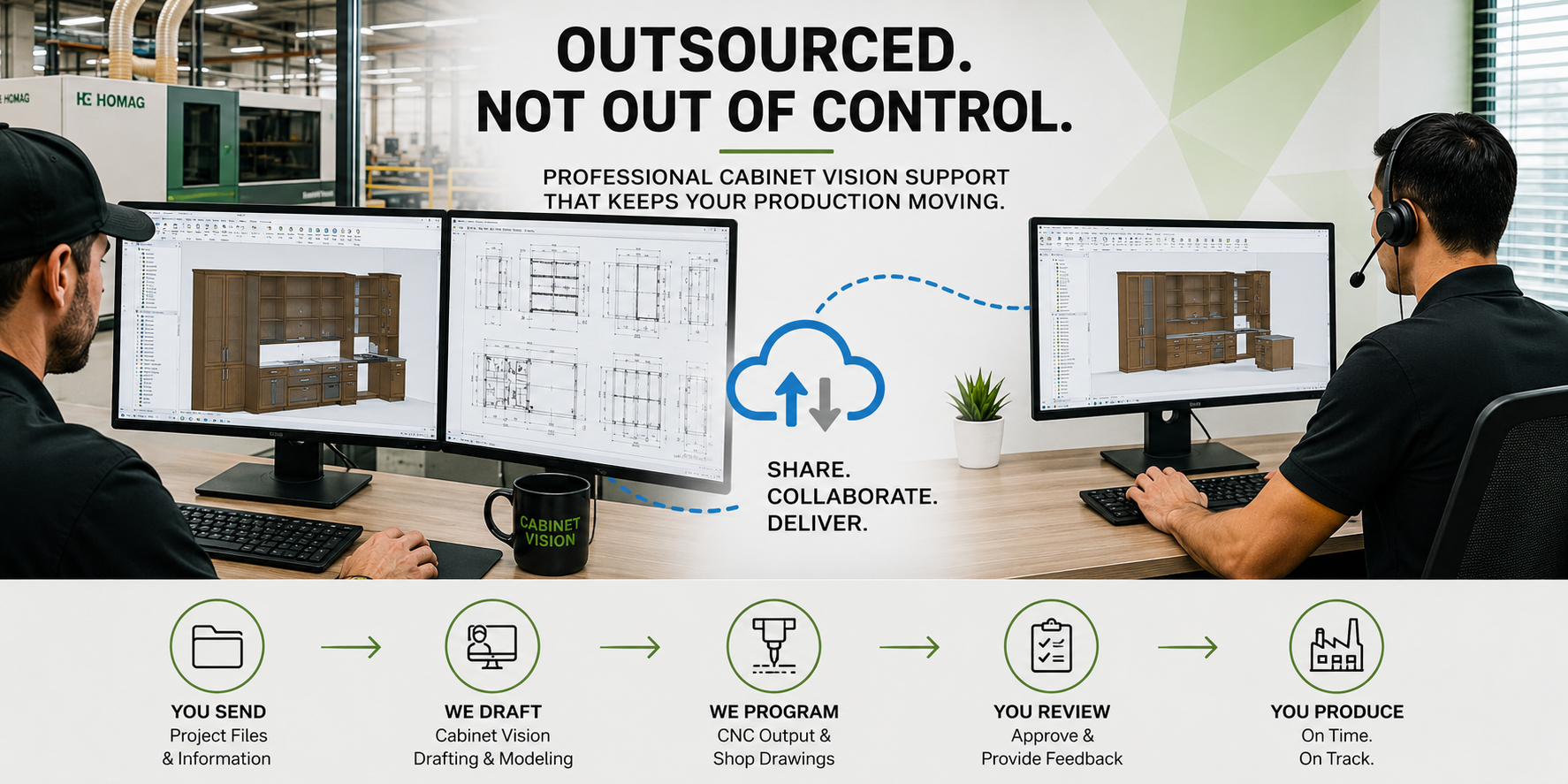
For many cabinet and millwork shops, outsourcing Cabinet Vision work sounds good in theory—but in practice, most companies hesitate because they’re worried about disrupting production, changing standards, or spending weeks organizing files before work can even begin.
The reality is that outsourcing does not need to be complicated.
A structured approach allows shops to reduce backlog, increase drafting capacity, and keep projects moving without overloading internal teams or rebuilding their entire system upfront.
The Biggest Mistake Shops Make
One of the most common mistakes companies make when outsourcing Cabinet Vision work is assuming they need to fully organize and standardize their entire system before getting started.
In reality, this often creates delays and stalls projects before the relationship even begins.
A better approach is to start with a single project.
This allows the external drafting team to:
- Understand the workflow
- Review construction methods
- Identify production standards
- Begin supporting backlog immediately
Without disrupting day-to-day operations.
Why Standardization Matters
Over time, many Cabinet Vision systems become inconsistent.
As engineers and programmers come and go, different standards, construction methods, and machining approaches are introduced into the system. Eventually, this creates inefficiencies and confusion in production.
A strong outsourcing partner should not only produce drawings and CNC output—but also help establish a more consistent foundation over time.
This creates:
- Cleaner workflows
- More predictable output
- Easier onboarding for future engineers
- Better long-term scalability
You Don’t Need a Perfect System to Begin
A common misconception is that a shop must provide a complete Cabinet Vision library before outsourcing can start.
In most cases, a single recent project file is enough to begin understanding:
- Construction methods
- Drawing standards
- Reporting structure
- CNC workflow
From there, the process can evolve naturally while production work continues moving forward.
The Best Outsourcing Relationships Start Small
The most successful outsourcing partnerships typically begin with:
- One project
- One submittal package
- One production backlog item
This allows both sides to establish workflow expectations before scaling support further.
As trust builds, the relationship can expand into:
- Ongoing drafting support
- Overflow production assistance
- CNC programming
- Standardization improvements
- Workflow optimization
Final Thoughts
Outsourcing Cabinet Vision work should reduce pressure—not create more of it.
The right approach allows shops to start quickly, maintain production flow, and gradually improve system consistency over time.
At Saline Design Group, we help millwork shops integrate drafting and CNC support into their workflow without requiring a complete system overhaul to get started.